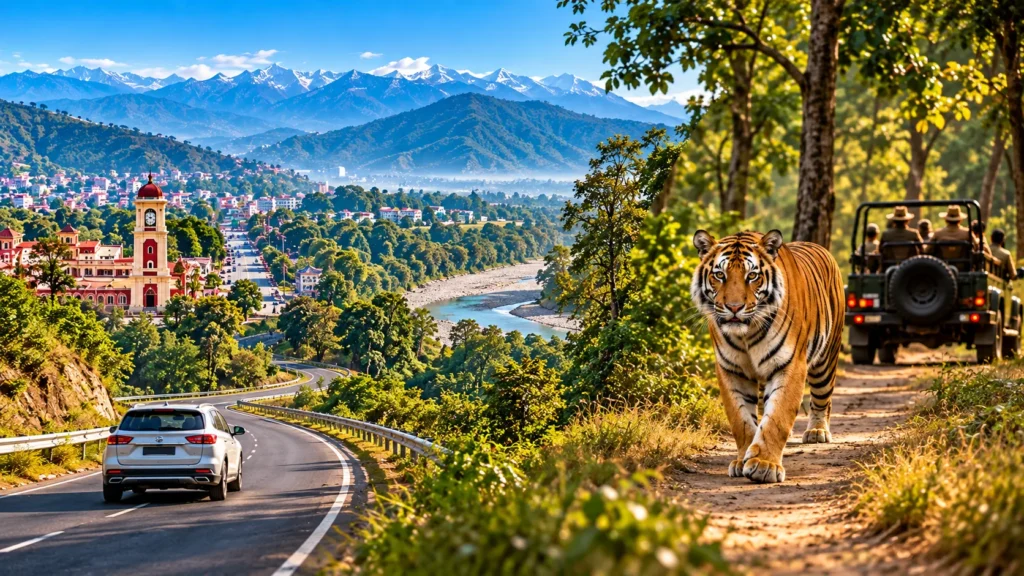
If you live in Dehradun, chances are you’ve driven past the edges of Rajaji National Park more times than you can count, maybe on the way to Haridwar for a wedding, or cutting through Chilla on a lazy Sunday drive. But here’s the thing most of us take for granted: one of North India’s most significant tiger reserves sits practically in our backyard, and its 2026-27 safari season is about to begin.
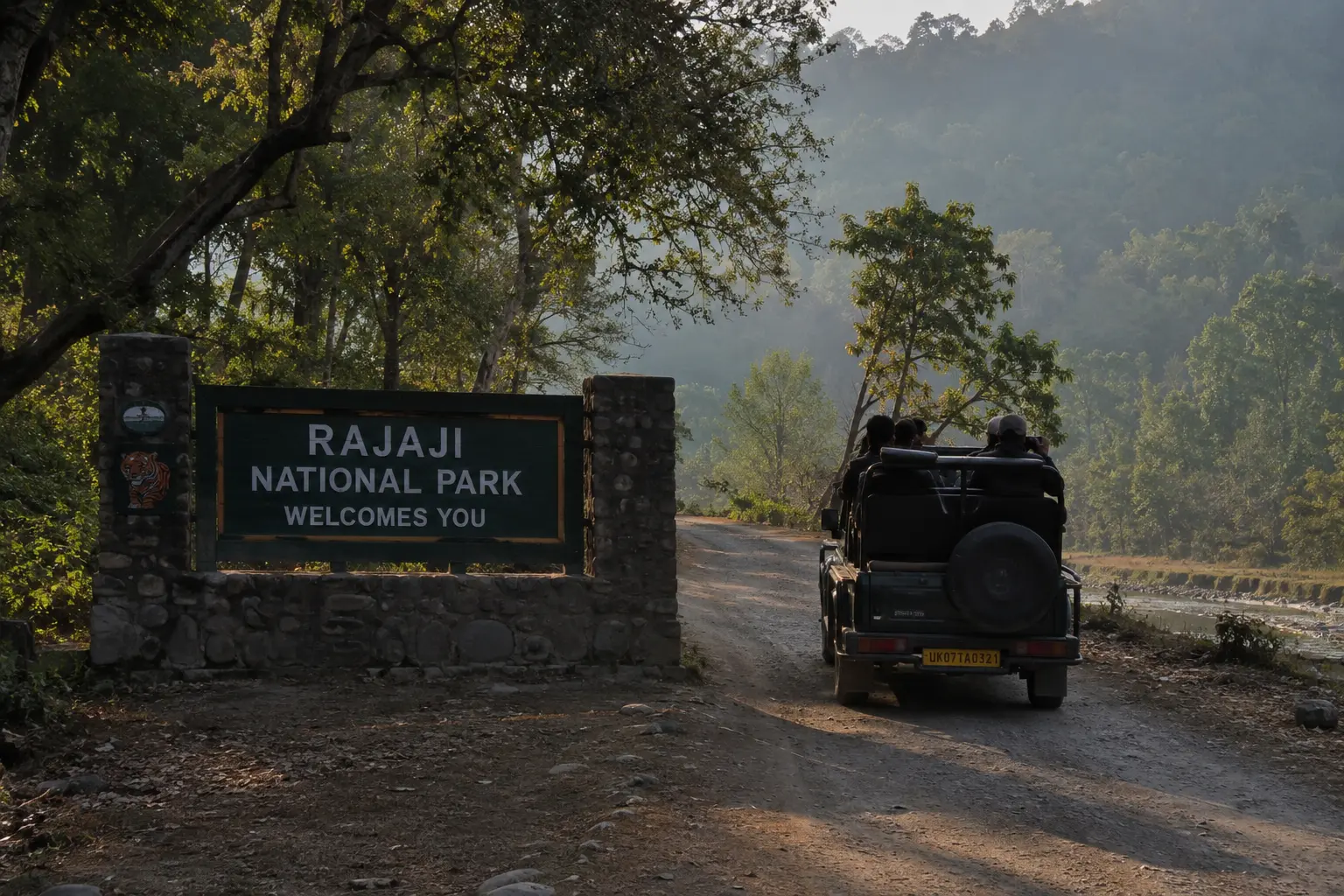
After nearly five months of monsoon closure, Rajaji National Park officially reopens on November 15, and if you haven’t planned a safari here before, this is the season to finally do it.
Why the Park Closes Every Monsoon
For those who’ve always wondered, Rajaji shuts down every year from June 15 to November 15. It’s not bureaucracy for the sake of it. The monsoon turns the forest tracks unsafe for vehicles, swells the rivers that cut through the park, and more importantly, gives the resident wildlife an undisturbed breeding season. When the gates reopen in mid-November, the forest is at its most alive, lush from the rains, with newborn animals and a fresh wave of migratory birds settling in for winter.
A Head Start for Birders: Jhilmil Opens Even Earlier
Here’s a fact that surprises even a lot of Dehradun residents. Jhilmil Jheel, a wetland conservation reserve near Haridwar that’s technically part of the greater Rajaji landscape, opens a full month earlier, around October 15. It hosts over 80 species of migratory birds each winter and is quietly becoming one of the best birding spots in the region. If you can’t wait until November, this is your early-access option.
What Makes Rajaji Worth Your Weekend
Rajaji isn’t a “lesser Corbett,” as it’s sometimes unfairly called. It has its own identity:
- Over 500 Asian elephants call it home, one of the largest populations anywhere in India
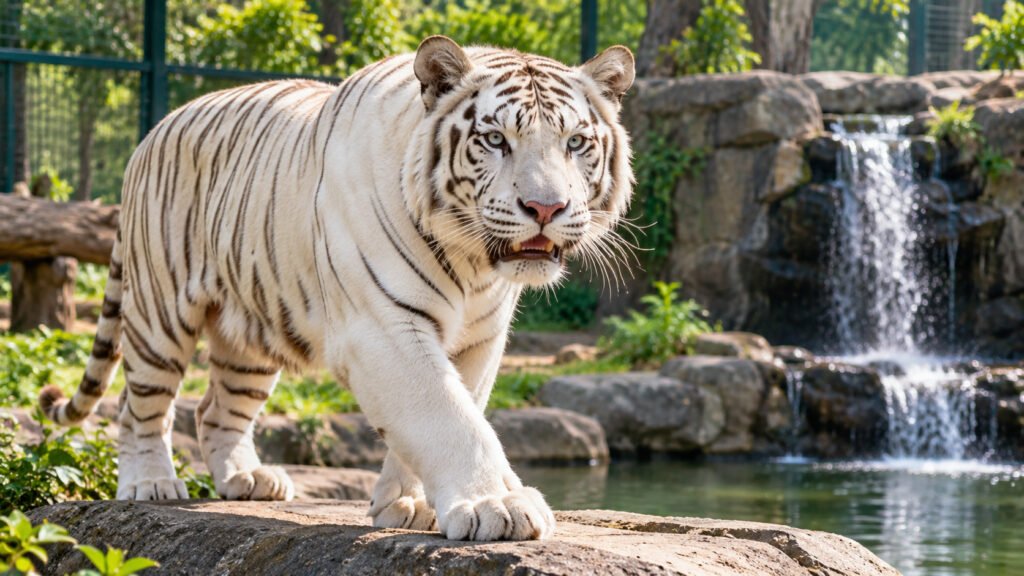
- A growing tiger population, thanks to its status as a designated Tiger Reserve
- 315+ bird species, making it a genuine draw for birders, not just tiger-spotters
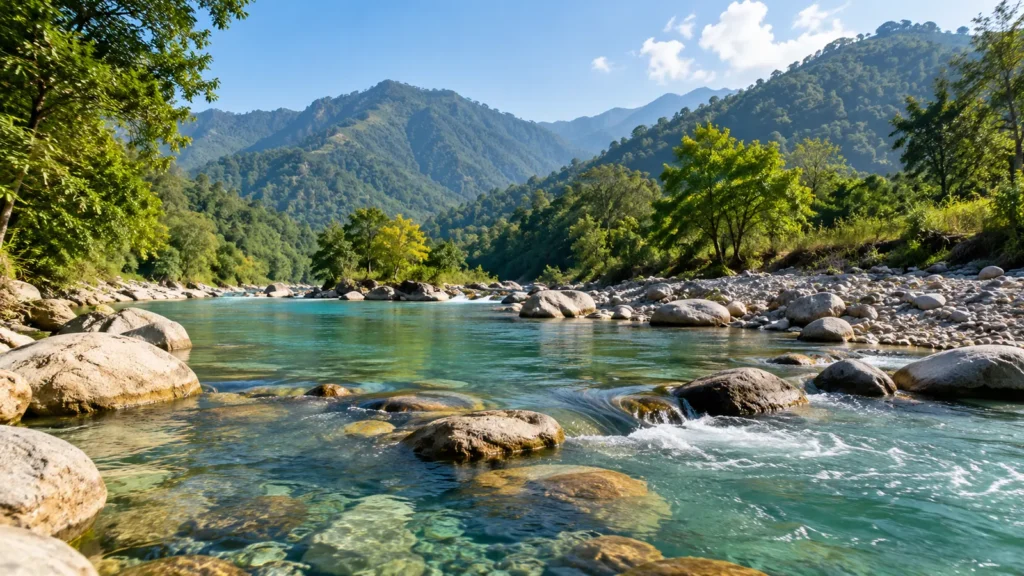
- Sal forests, riverine grasslands, and the Ganga and Song rivers running through it, a mix of terrain you don’t get at most other reserves
And unlike a lot of wildlife destinations that require a full day’s travel, Rajaji’s zones, including Chilla, Motichur, Ranipur, Mohand, and Jhilmil, are all within an hour or two of Dehradun, Haridwar, and Rishikesh.
Planning Your Visit: What Dehradun Locals Should Know
A few practical things worth knowing before you plan your first (or next) safari:
Book ahead for peak months. November through February is when Rajaji is at its best: cooler weather, higher wildlife activity, and migratory birds in full swing. It’s also when slots fill up fastest, sometimes within a day or two of opening. If a winter weekend safari is on your list, don’t leave the booking to the last minute.
Morning slots see more action. Wildlife activity is noticeably higher in the early morning hours, so if you have a choice, take the 6 AM safari over the afternoon one.
Carry valid ID. Aadhaar or Voter ID is required at the time of booking and entry for Indian visitors.
Off-peak has its perks. If crowds aren’t your thing, March through early June sees fewer visitors, and rising summer temperatures actually push animals toward waterholes, sometimes making sightings even easier.
A Reserve We Should All Be Prouder Of
There’s something a little strange about how many of us in Dehradun have been to Jim Corbett or even flown out for a wildlife trip, while a Tiger Reserve sits practically at our doorstep. Rajaji doesn’t get the same spotlight, but for anyone who’s actually done a safari here (spotted a herd of elephants crossing the Ganga, or caught a tiger’s pugmarks fresh on a forest trail), it’s clear the reserve deserves a lot more local attention than it gets.
With the season reopening on November 15, this winter is as good a time as any to finally add it to your plans, whether that’s a half-day family outing or a full weekend built around it.
For zone-wise details, current safari packages, and booking information for the 2026-27 season, Rajaji Jungle Safari has a detailed guide on planning your visit.