
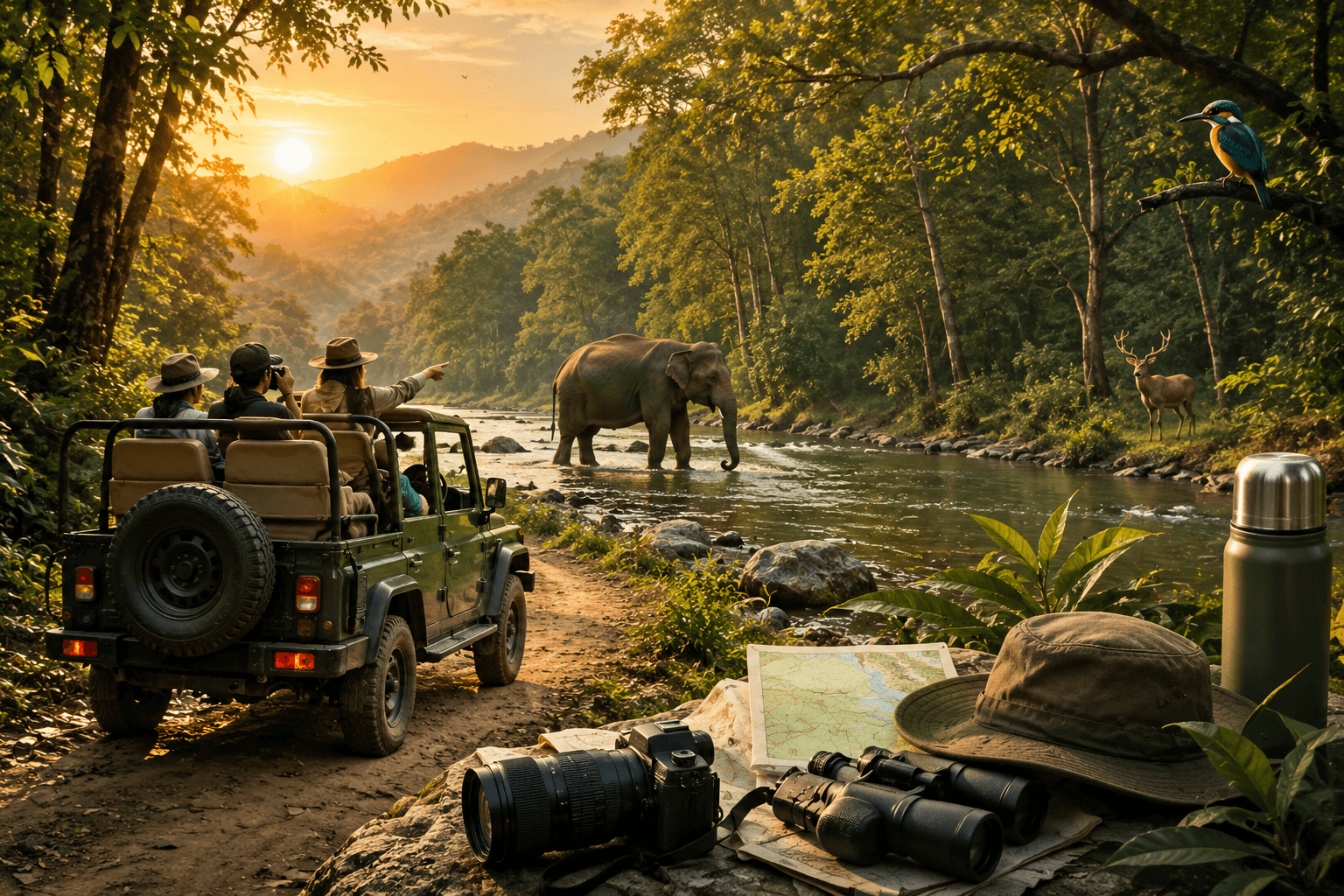
If you live in Dehradun, you don’t have to travel far to spot a tiger. Rajaji National Park spread across Dehradun, Haridwar, and Pauri Garhwal is one of the closest tiger reserves to the city, and yet a surprising number of locals have never been on a safari there. If you’re planning your first trip, here’s everything worth knowing before you book.
1. Rajaji Isn’t One Park It’s Six Different Safari Zones
Most first-timers assume there’s a single entry point, but Rajaji is divided into distinct safari zones, each with its own character:
- Chilla – the most popular zone, known for the highest tiger density
- Motichur – long forest drives, good for tigers, leopards, and elephants
- Ranipur – Rajaji’s elephant stronghold, close to Haridwar
- Ramgarh – a quieter, lesser-known gateway near Dehradun
- Jhilmil Jheel – wetlands and lakes, ideal for birdwatchers
- Mohand – accessible via the Saharanpur-Dehradun highway, good for both wildlife and hiking
Picking the right zone changes your whole experience, so decide based on whether you’re chasing tiger sightings, elephants, or birds.
2. Safaris Run in Two Fixed Windows a Day
Rajaji doesn’t offer safaris around the clock. There are two slots:
- Morning: 6 AM to 9 AM
- Evening: 3 PM to 6 PM
Mornings tend to be cooler and quieter, which usually means better wildlife activity — worth keeping in mind if you’re deciding between an early alarm or a lazy afternoon drive.
3. The Park Is Closed for Almost Half the Year
Rajaji operates from November to June and shuts down completely during the monsoon (mid-June to mid-November) to let the forest recover. If wildlife sightings are your priority, March to June is considered the best window, since animals gather more visibly around shrinking water sources.
4. You Can’t Drive Yourself In
Private vehicles aren’t allowed inside the reserve. Every safari happens in a designated 4×4 jeep arranged through the forest department or a registered operator, usually with a naturalist guide on board. This isn’t just a rule for rule’s sake — it keeps the park safer for both visitors and animals.
5. Budget for More Than Just the Entry Ticket
The entry fee itself is affordable (around ₹150 for Indian nationals), but the full cost adds up once you include the jeep, a guide, and camera charges if you’re carrying serious equipment. It’s worth checking current fees before you go, since vehicle and guide charges vary by zone and season.
6. There’s a New Reason to Visit Right Now
A young male tiger recently relocated from Corbett has settled into Rajaji, adding fresh excitement to an already tiger-rich reserve. If you’ve been putting off a visit, this is a good season to finally go.
7. Bring Binoculars — Rajaji Is as Much About Birds as Big Cats
With over 400 recorded bird species, including hornbills, woodpeckers, and migratory visitors, Rajaji rewards patience as much as luck. Even if a tiger doesn’t show up, a good pair of binoculars will make sure the trip isn’t a letdown.
Planning Your Visit
Rajaji is easily reachable from Dehradun Jolly Grant Airport is about 33-40 km away, and Haridwar/Rishikesh railway stations are even closer to the Chilla gate. Advance booking is strongly recommended, especially in peak months.
If you’re ready to plan your first safari, Rajaji National Park offers zone-wise booking, experienced local guides, and up-to-date information on fees, timings, and availability a good starting point before you head into the forest.